This article was first published in the APDT Chronicle of the Dog, Spring 2025 issue. I made some minor edits to the original in this blog.
I do not use generative AI in any of my content. Thank you for supporting human writers and our brains 🙂
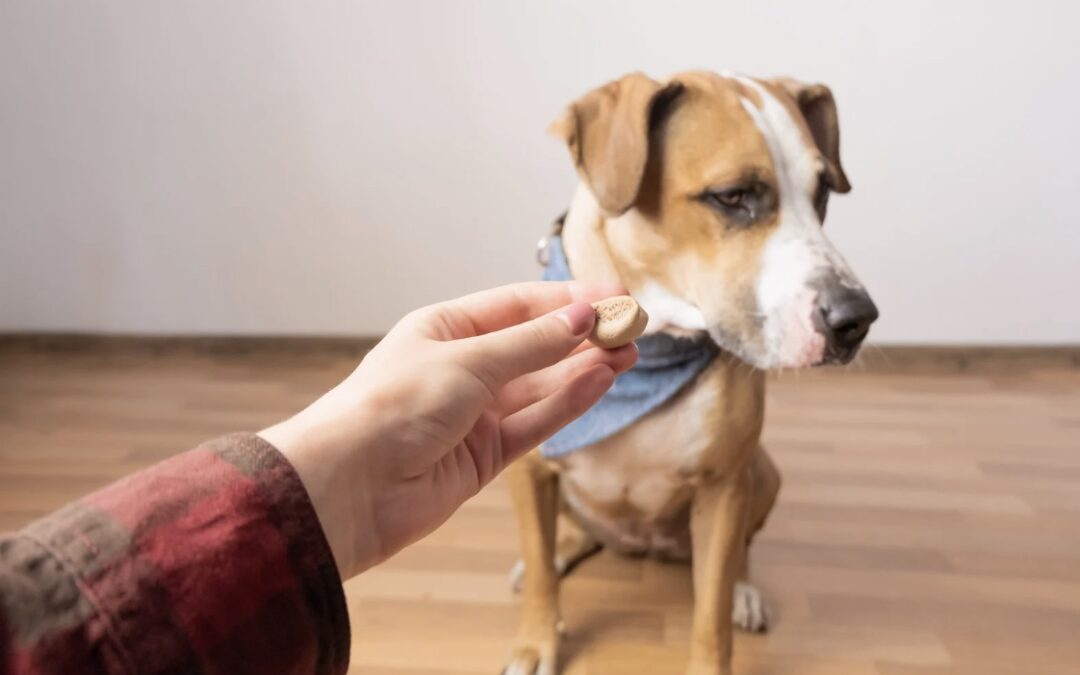
“I tried treats and they didn’t work for my reactive dog” is a sentiment I hear all too often from prospective clients. They want to use positive reinforcement based methods, but they are getting stuck because their dog is unable to eat in public, or is unable to eat when distractions (specifically other dogs) are present. Naturally, they assume that using food rewards (I’ll refer to them as treats for this article) is not an option for them, and that they don’t “work.” I put “work” in quotations because of course treats are an effective tool to modify leash reactivity. But there are a lot of misconceptions about HOW they are supposed to work. The biggest misconception I see is that the dog is supposed to choose the treats over the distraction, and when they can’t, it means that the dog does not value the treats enough. Food is inherently valuable to dogs, but food coming from a person, especially with an agenda attached to it, is not inherently valuable for some dogs. This is where I begin to unpack a client’s reinforcement procedures, so that I can determine where the holes are, and how we can start to turn things around.
Common Reasons Why Treats Don’t Work
Eating Outside is Unfamiliar to the Dog
We as humans tend to make a lot of assumptions about dogs and treats. We assume that any dog is going to want to eat a treat, at any time. Pause and think about the word we commonly use to describe food rewards – treats. As in it is something extra special, or out of the ordinary. Who wouldn’t want to receive something like that? Well, as it turns out, dogs.
There are a few reasons for this. One, dog behavior is highly contextual, and if we don’t help dogs develop multiple reference points for the same behavior, they often look at us like they are asking, “you want me to do what?” Eating is a behavior, and for dogs who have a history of only eating inside of their homes, or out of a bowl at mealtimes, the notion of eating outside on a walk might as well be a foreign concept to them. Even if the food is different than what they receive at mealtimes, such as treats. When you add the presence of a distraction on their walk such as another dog, it’s no wonder that many dogs refuse to eat treats in that context – it is not something they are accustomed to doing. I also want to add that it is very common for handlers to try and force feed their dog when they refuse treats, because in their experience, the dog eats them at other times, so why not now? They often go through an extinction burst of trying to shove the treat in the dog’s face, which the dog then begins to find aversive, further devaluing treats.
Treats are Only Presented During Times of Stress
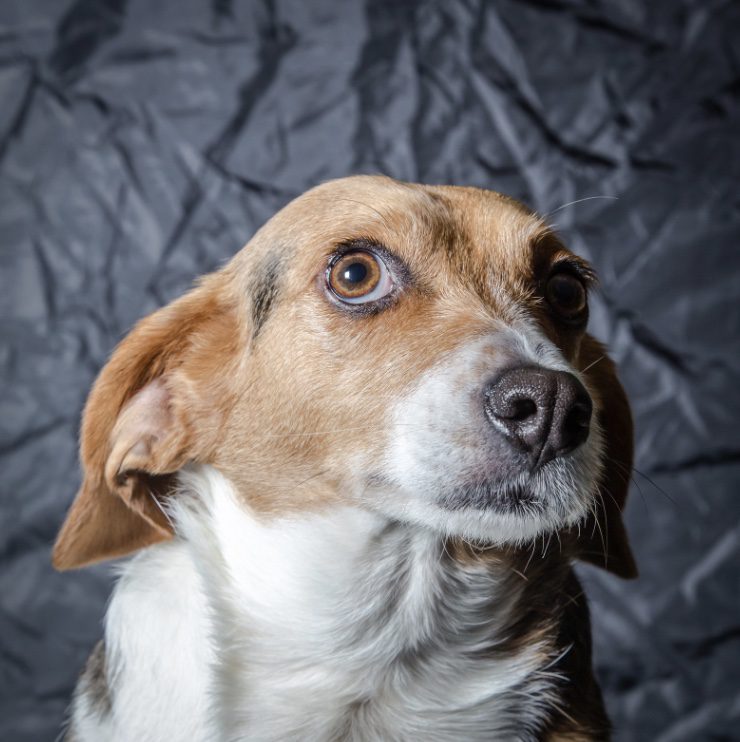
This is where classic counter conditioning procedures tend to go sideways for dogs who are reactive on leash. The handler wants to build a positive association to other dogs on walks, so they withhold the treats until another dog comes along. Then they try to feed their dog as they notice the other dog. Sounds good on paper, right? Except this often gets messy, because it’s very difficult to execute an effective classic counter conditioning procedure with your average dog handler, on a typical walk, in their neighborhood. Put plainly, there are too many conditions that need to be right in order for this to be effective. And what often happens is that the dog associates treats = triggers, rather than the other way around, making the treats less desirable at best, or aversive at worst.
Criteria is Too High
Perhaps a client has been trying to use a more operant approach with their reactive dog, by asking for a specific behavior when they notice another dog on walks. For the sake of this example, I’ll use the behavior of sit. At home, the dog sits readily for a variety of things they want – a toy, their food bowl, a chew, a treat, to exit the front door. But on walks, the dog is slow to respond, or doesn’t respond at all. Because the dog responds readily in many other contexts, the handler assumes that the dog isn’t interested in earning treats for sitting on walks. What is likely the culprit though, is that asking for a sit is too high of a criteria for reinforcement for that dog, in that specific environment, and under those conditions. It is less about the dog’s desire to earn the treat through the behavior, and more about the conditions themselves being too difficult.
The Manner in Which the Treats are Delivered
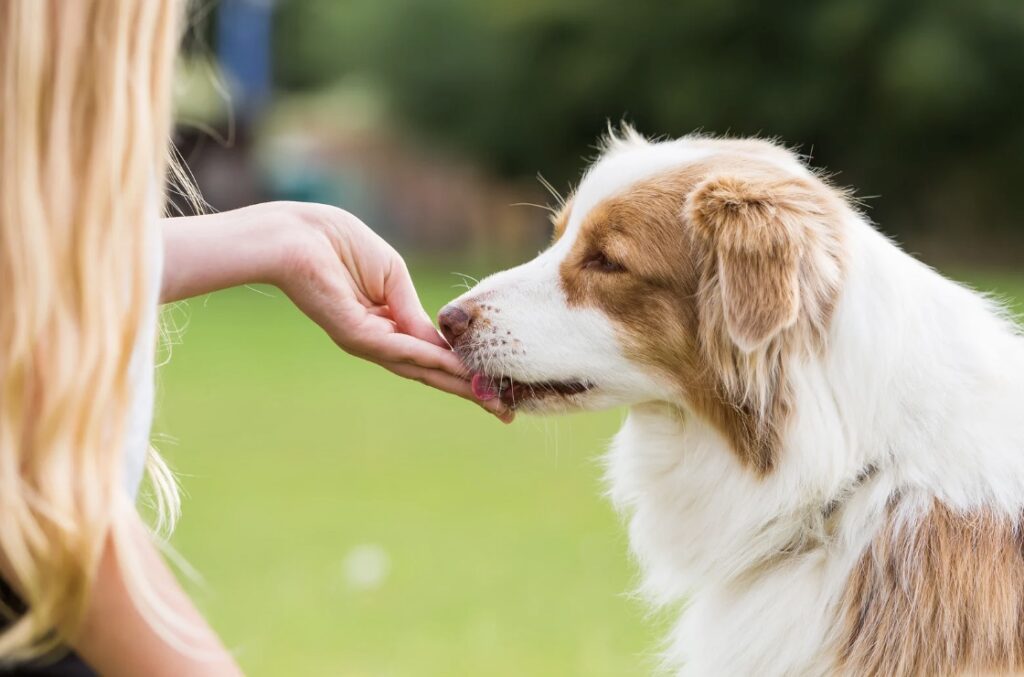
Delivering a treat to a dog’s mouth may not be the preference for that individual dog, which is why they are hesitant to take them. Going back to the assumptions we humans make about dogs and treats, it’s common to wonder what dog wouldn’t want to eat a treat fed to their mouth?
It’s not just about the treat, there are many other things happening at the same time the dog is being offered the treat including:
- The person reaching out towards the dog with the treat in hand
- The person leaning over the dog, in their personal “bubble”
- The person staring at the dog expectantly
- The person talking to the dog
And it’s very possible the dog is experiencing all of these things at once, which can put a lot of social pressure on them. I find this to be especially relevant when a dog is on the more sensitive, reserved, or fearful side.
A Roadmap to More Effective Reinforcement
Building Value in Eating Treats
The most important aspect of building value in eating treats is to begin this process in an environment that the dog feels safe and relaxed in, which is usually the inside of their home. I ensure no other animals are around, and that it’s quiet. And if I need to, I might also begin this process being seated, to avoid looming over the dog on accident. I cannot overstate the importance of setting the stage enough – too often we expect dogs to eat within a busy environment, and this makes it difficult for them. The whole idea of building value in eating treats is to make this as easy as possible and something the dog looks forward to.
In regards to the treats themselves – perceived value does matter, but instead of focusing solely on the type of treat you are offering the dog, we’re also focusing on making the process of eating the treats fun and easy for the dog. I often find that the size and consistency of the treat matters most here – some dogs like crunchy, some like soft, some like aromatic. Treats that are too big will take longer to eat, and for a dog who is resistant to taking treats this can backfire. Instead, I use small pieces that can be eaten quickly. I’ll have a variety of textures on me and see what the dog is most drawn to.
Starting with Treat Tosses
I start by tossing the treat to wherever the dog is, so they don’t have to come into my space, and also so I don’t have to feed to their mouth. I do this for dogs regardless of how social/comfortable they are with me – part of this is to reduce social pressure for those that need it, and the other part is to offer food in a context they probably haven’t experienced before, which often piques their interest.
Once the dog is eating treats readily, I begin to toss/roll them just past the dog so they have to move after the treat. Some dogs adapt to this game quickly – they are eager to move after the treat so I begin to toss them farther to encourage a chase. For others, I gradually add more movement as they are ready. Next, I begin to toss the treats to the left and to the right of the dog, making it a ping pong game. And last, I add a verbal cue to this game – personally I use the phrase “get it” before tossing a treat to chase. By adding the verbal cue, we can help the dog know what to expect.
I find that adding a ping pong pattern to treat chases is especially helpful for applications which I’ll outline later in this blog, but for now, I’ll end this section with mentioning that treat chases are my go-to approach for dogs who are resistant to taking treats in any form. It’s a fun, engaging way for a dog to eat a treat, with very little pressure from the human.
Adding Other Ways of Taking Treats
Treat chases involve eating one treat at a time, and once the dog is enthusiastic about this game, I begin to add other ways the dog can eat treats. Treat scatters (dropping a handful of treats on the ground at once) involves multiple treats, which is why I typically don’t start with them. Why you ask? Because eating one treat is easier than eating several. And for dogs who are nervous about taking food, presenting large quantities of food on the ground can put undue pressure on them. But once a dog is more comfortable and eating readily, I incorporate treat scatters, with smaller sized scatters to start.
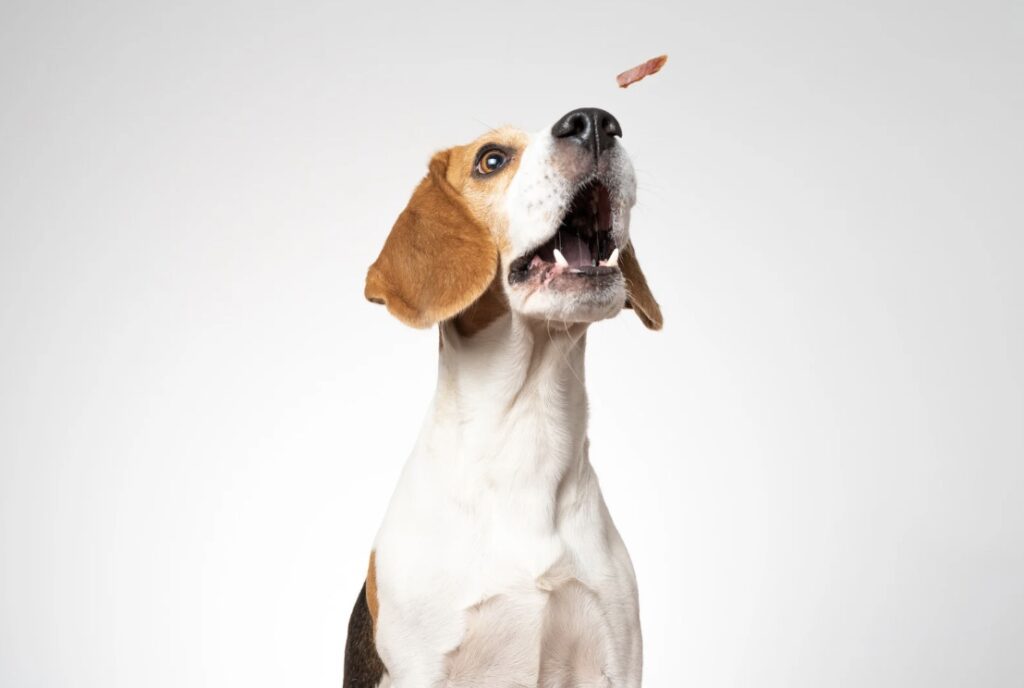
I may also, depending on the dog, teach them how to catch treats to their mouths which can be really fun for some.
Then, I’ll revisit feeding the dog directly to their mouth. All in all, I’ve built in treat chases, treat scatters, treat catch (depending on dog), and treat to mouth. And I have specific verbal cues for each, so the dog knows exactly when and where they will find their reinforcement. I call this entire process All the Ways You Can Eat a Treat game.
Building a Routine
For some of my cases, I find it really helpful to create a routine, or pattern out of these games. For example:
4 ping pong treat chases followed by 2 catches followed by 3 treats handed to the mouth followed by 1 treat scatter. I then use this routine as a powerful way to get dogs eating, engaging with their handler, listening for cues, and having fun while doing it. This is especially helpful for dogs who struggle staying engaged outside, or who are less food motivated outside.
Keep in mind that at this point, the dog should still only be playing these games in a quiet, low distraction environment that they are comfortable in – inside their home or perhaps their backyard, not on walks yet. It’s important that it is well rehearsed before practicing in busier environments.
See the example below of me practicing a routine with a dog shortly after we got out of the car for a park visit. This dog would struggle to stay engaged when other dogs were around, and was far more successful when we began our visit with this routine.
Why This Game?
There are a few key components to this game which set it up to be a helpful solution to solving the issue of dogs not being able to eat in public or when distractions are around.
First, the process has been broken down into easy steps, and rehearsed in an environment the dog feels comfortable in. This is key to helping the dog understand that eating food with their handler doesn’t need to be a source of stress or conflict.
Second, there is a focus on multiple repetitions. When you reinforce multiple repetitions of any behavior, it strengthens them.
And third, it’s predictable. With the addition of verbal cues paired with the location of the treats, and perhaps a routine built in, the dog knows exactly what to expect.
When we have all 3 of these things in place, it makes applying this reinforcement system far more successful in real world scenarios, because there has been a high degree of preparation. When we prepare dogs with the skills to respond in public and around triggers, it’s easier for them to succeed. It’s easier because it’s familiar. And that familiarity is paramount, especially when we take reactive dogs in public, where the unfamiliar abounds.
Examples of Real Life Applications
Scenario: Dog eats treats indoors, but refuses food outdoors.
Solution: Teach and practice All the Ways You Can Eat a Treat daily, indoors, for 1-2 weeks. Perhaps the routine for this dog is ping pong treat chases – feed to mouth – treat scatter. Make a point to practice this routine in several other locations inside the home, and then near the exit door.
Then, crack open the front door one inch, and be strategic about ping ponging the treat chase near the opening of the door, and then away from the door. Do 4-6 treat chases before moving onto feeding 3-4 treats directly to the mouth, then moving away from the door and across the room and doing a treat scatter.
Because the dog has a history of ping ponging while chasing treats, it makes it easier for them to leave the cracked door/not fixate on it, while also allowing a little bit of the “outside” in without overwhelming them.
Build to the dog being on leash and the door gradually opened all the way, following the same routine with the dog chasing treats in and out of the threshold of the door followed by the next 2 steps of the routine inside, but with the door still open.
From there, practice the routine just outside the front door, down the driveway, and so on. By having a familiar routine and slowly exposing the dog to a stressful environment we make this a process that the dog can succeed at. This process outlined above should take place over several short sessions.
Scenario: Dog is able to eat and stay mostly responsive outside, but gets stuck when another dog stares at them from across the street and refuses to move. Handler tried asking dog to come away on cue, but this only works if the other dog is far enough away.
Solution: Assuming that this dog has been conditioned to treat chases at home using the processes outlined above, I like to incorporate them into scenarios where movement will help keep the dog from reacting, especially when adding distance is not an option.
First, I would start by marking whenever the dog notices a low level distraction (person walking, a bicyclist, or a dog far away) and then reinforce that with a treat chase tossed in the opposite direction. Once the dog eats the treat, I wait for them to briefly notice the distraction and then mark + toss another treat. Rinse and repeat until the dog is far enough from the distraction that it is no longer relevant to them.
By practicing this with low level distractions first, it helps the handler and dog rehearse the routine before building to higher levels of distractions/dogs who stare. And by lowering criteria (marking for noticing vs calling the dog away) it’s easier for the dog to respond, avoiding a reaction. And last, by tossing treats in the opposite direction, it encourages movement which helps the dog get less stuck.
Reinforcement Strategies + Foundation Behaviors
With my leash reactivity cases I incorporate All the Ways You Can Eat a Treat in addition to building foundation skills specific to that individual dog such as loose leash walking, offered eye contact, call aways, engage/disengage, etc. Teaching both means I have a wide variety of skills I can pull from. It also means that I have skills that are easier for the dog to succeed at on walks while I’m building the other foundation skills that often need more time.
Which of these skills I choose to teach varies widely, depending on the dog. For some, I might only utilize treat chases in combination with a specific behavior such as engage/disengage, whereas for others I may spend extra time building in a routine of treat chases – treat catches – treat scatter in addition to a host of foundation behaviors. Where the dog’s skill set lacks the most, as well as their ability to stay engaged outside are the drivers to these decisions.
I have yet to find a reactive dog for whom “treats don’t work.” Instead, I find dogs and handlers who are unprepared to train outside, and need help changing their relationship to treats, together.